
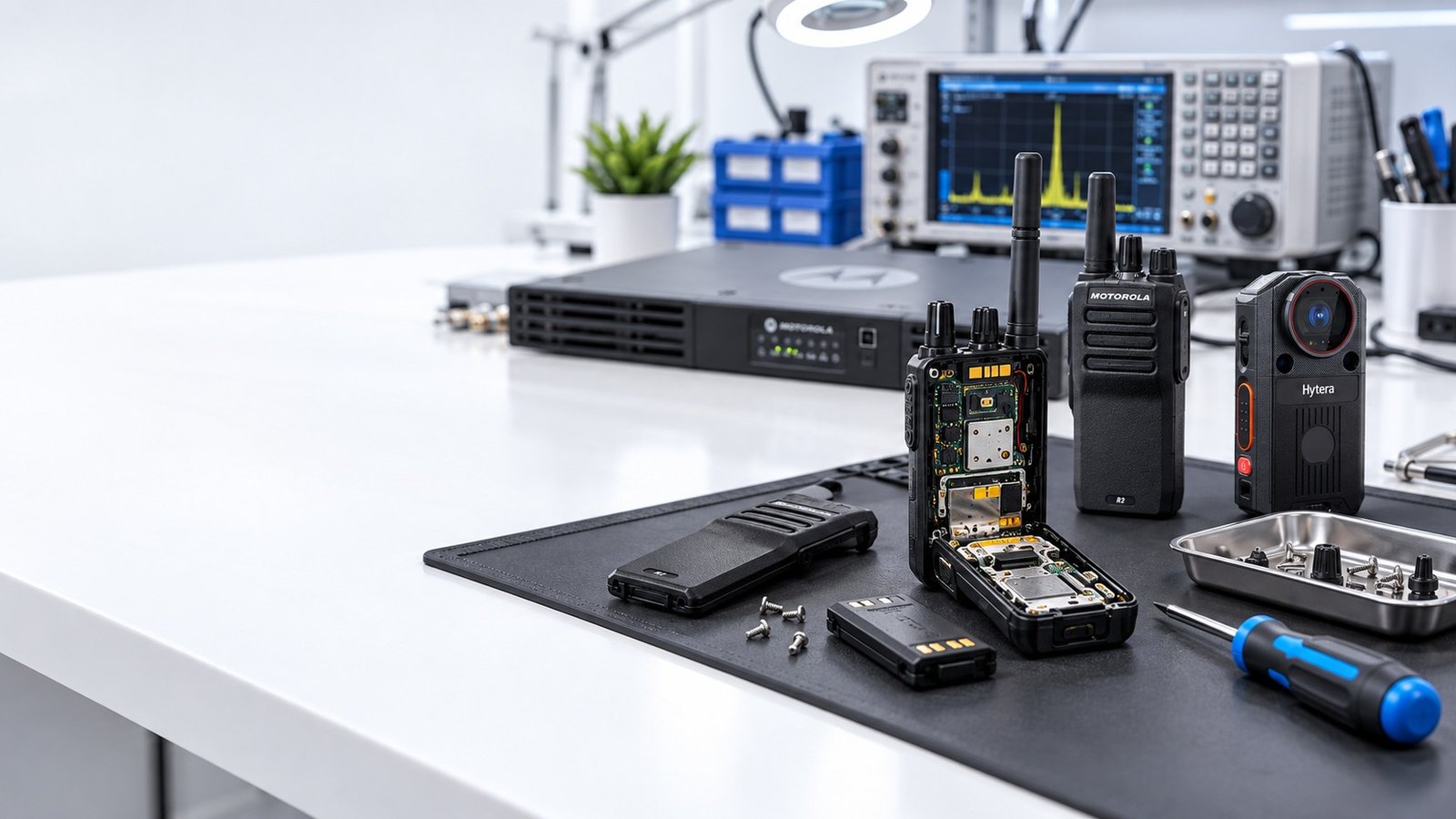
Technical support
Radios always
in service.
Technical support for two-way radios, with precise diagnosis, preventive and corrective maintenance and repair after your authorization.
Specialized servicefor two-way radios
More than 10 yearsof experience
Technical supportMotorola Solutions and Hytera
Timeframe providedafter diagnosis
Warranty terms definedaccording to the service performed
Our services
Complete solutions
for your two-way radio
From preventive maintenance to advanced repair, our technical support evaluates the equipment, explains the diagnosis and presents the recommended service for your decision.
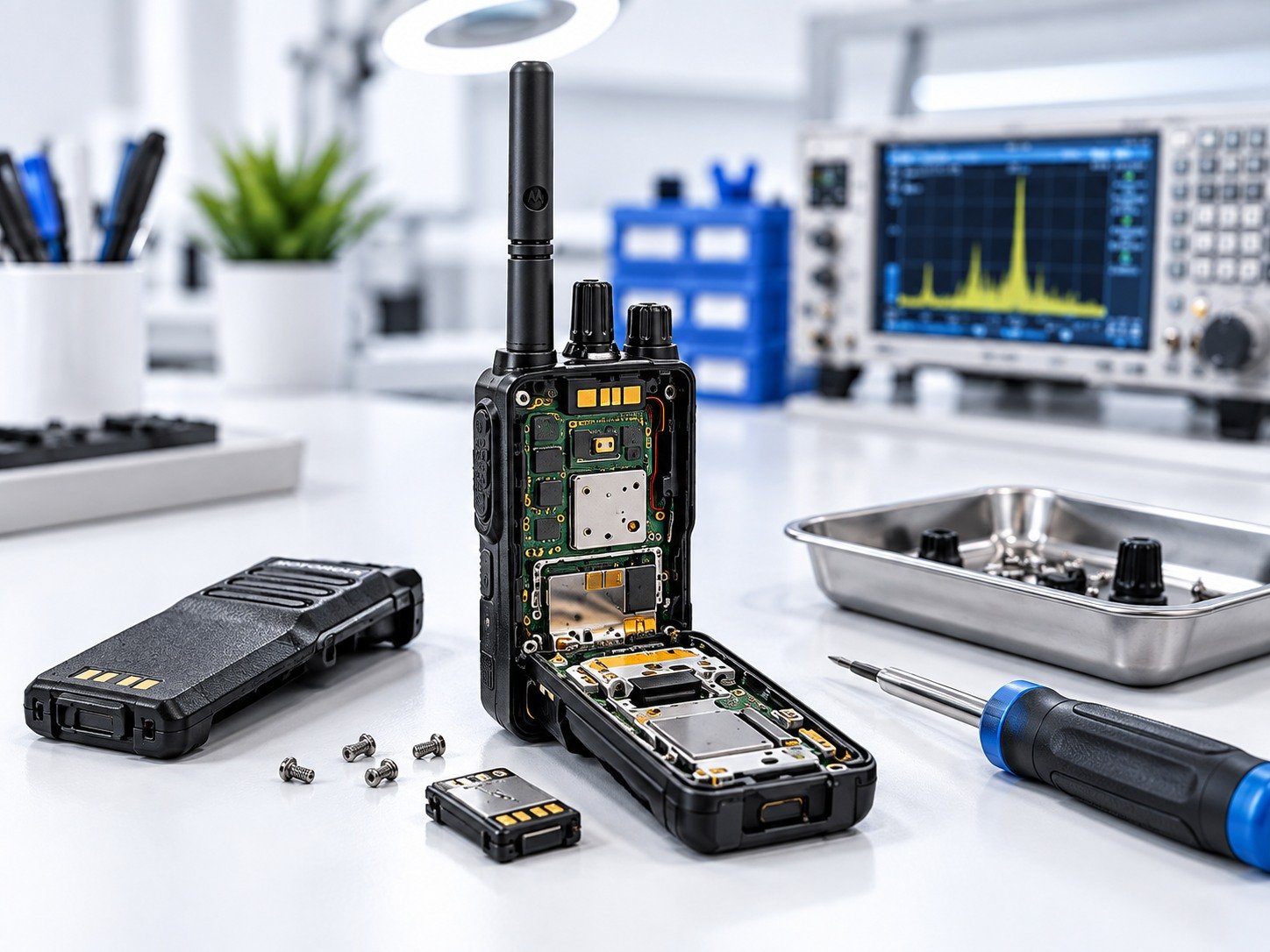
Radio repairs
Diagnosis of power supply, audio, transmission, reception and control failures.
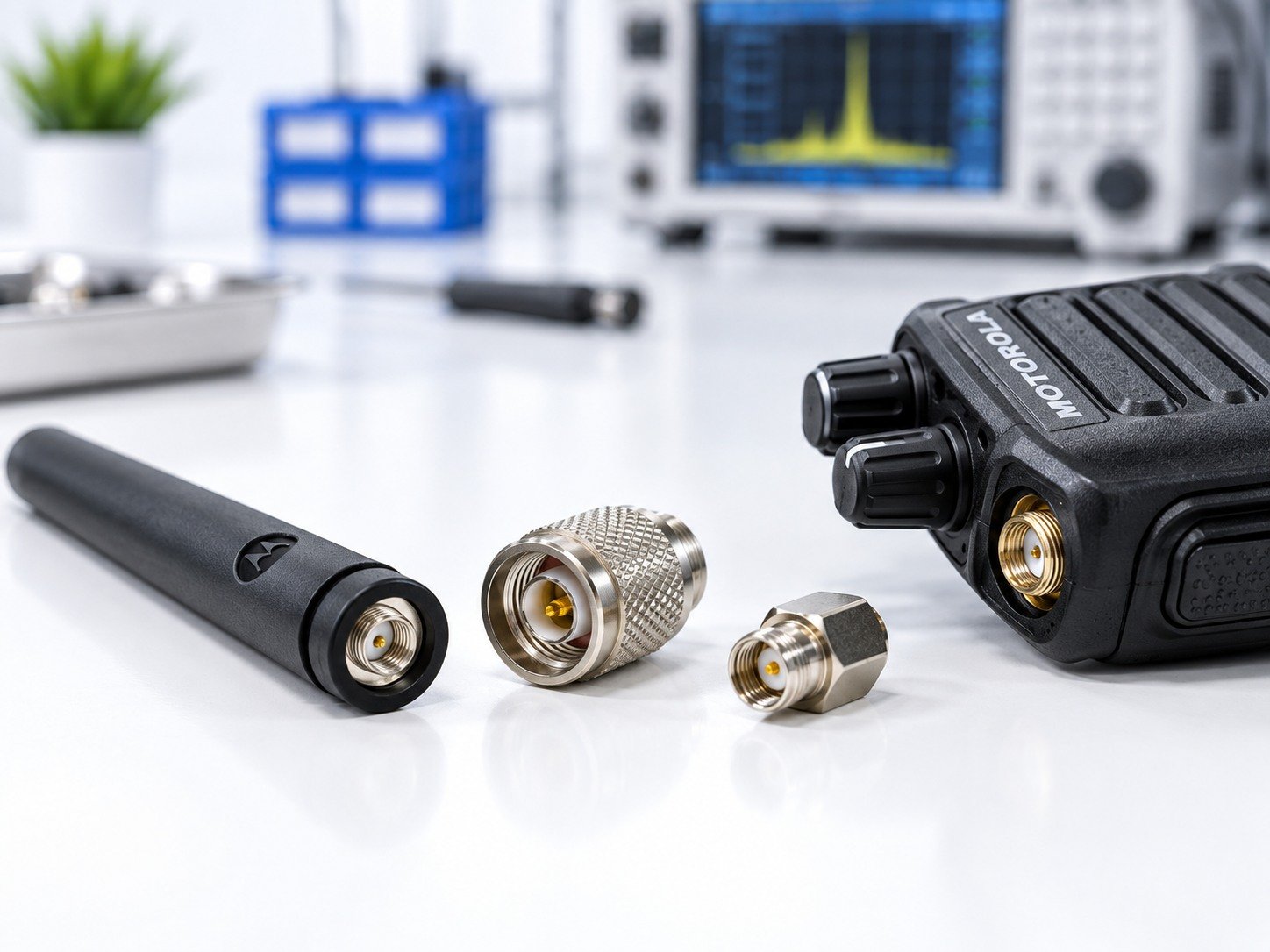
Connectors and accessories
Evaluation of antennas, connectors, microphones and accessories involved in the failure.
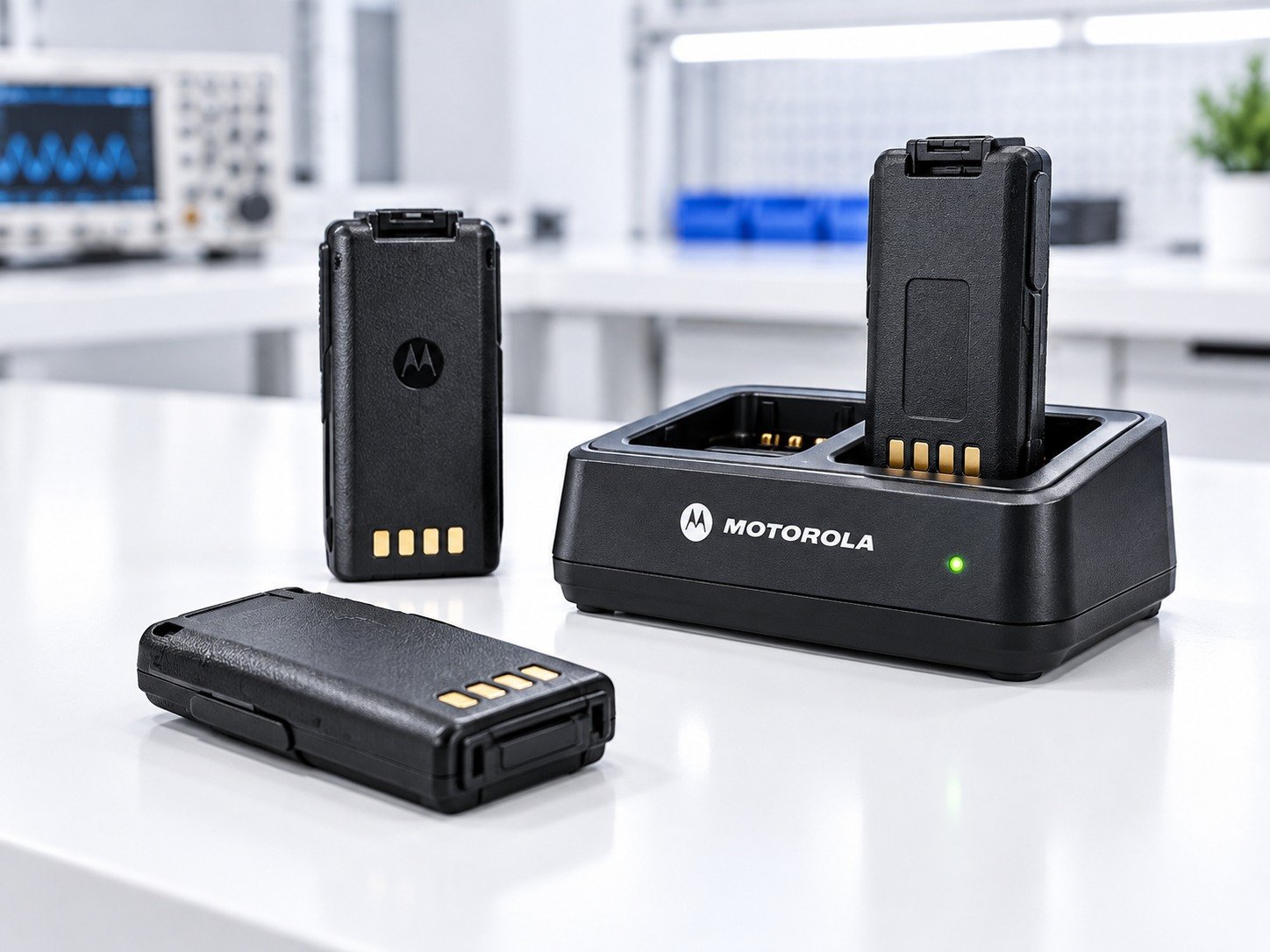
Batteries and charging
Autonomy and charging tests and guidance on replacement when necessary.
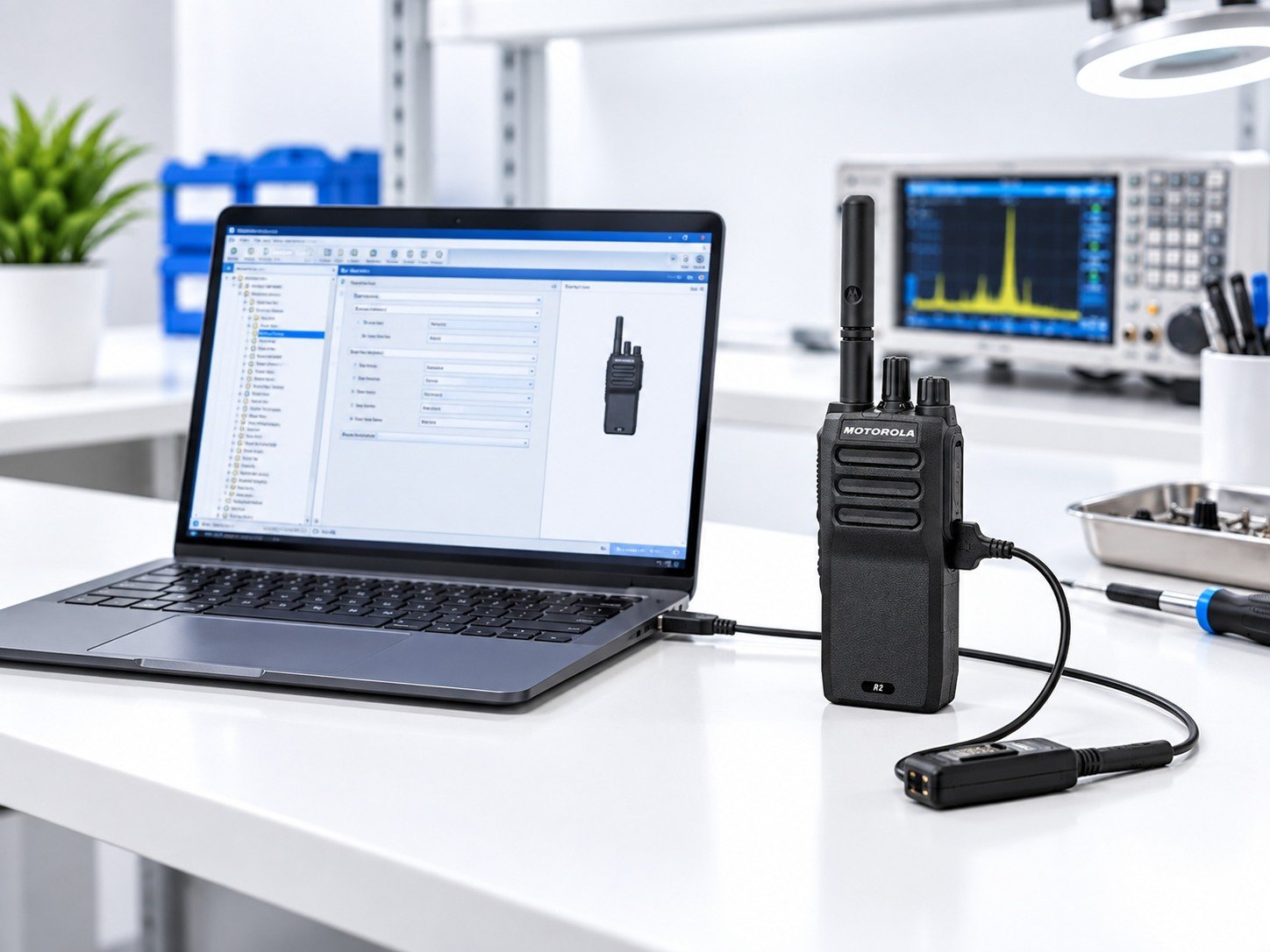
Programming and software
Configuration, channel review and update when applicable to the model.
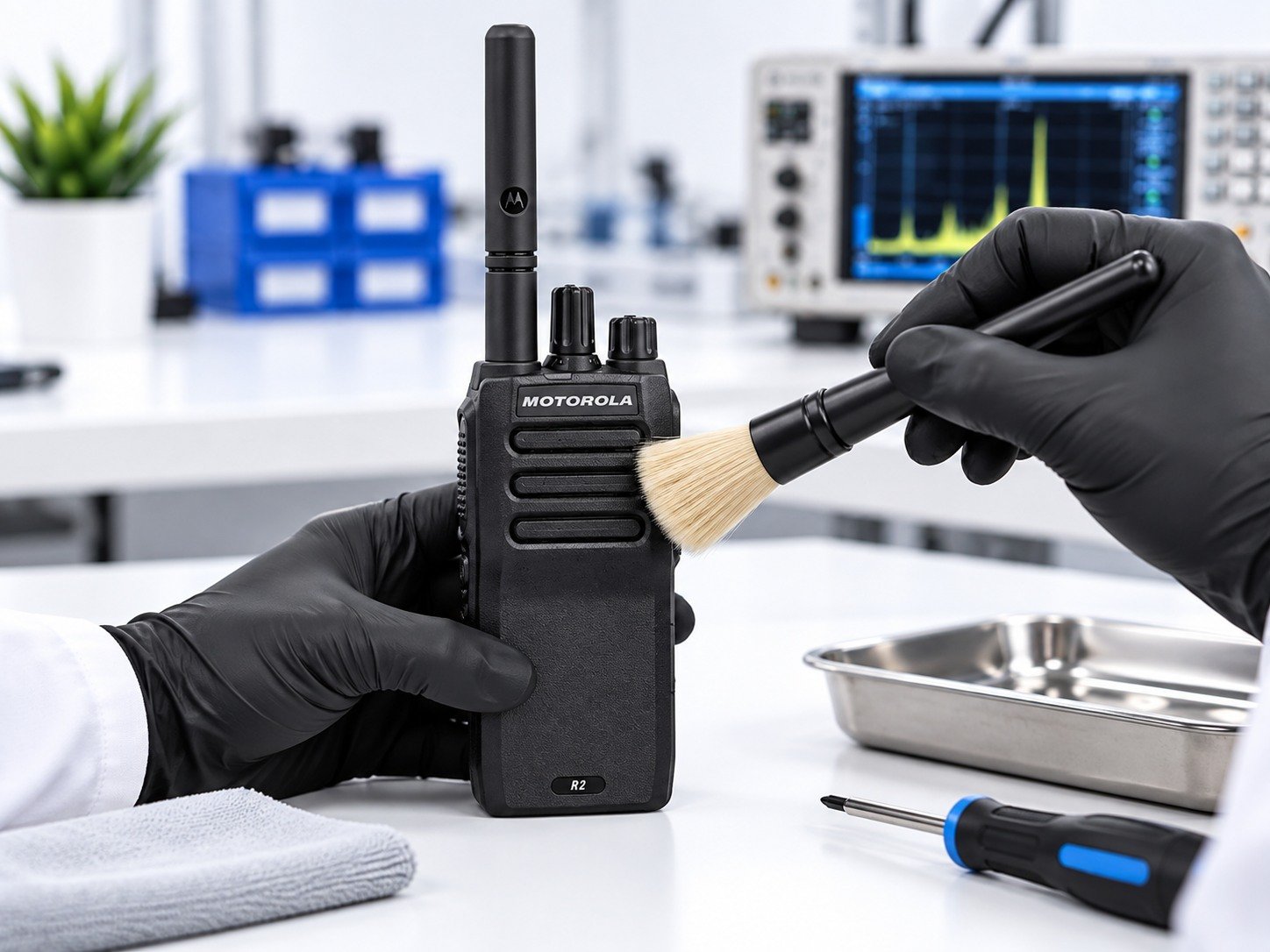
Preventive maintenance
Technical cleaning, wear inspection and checks of items used across the radio fleet.
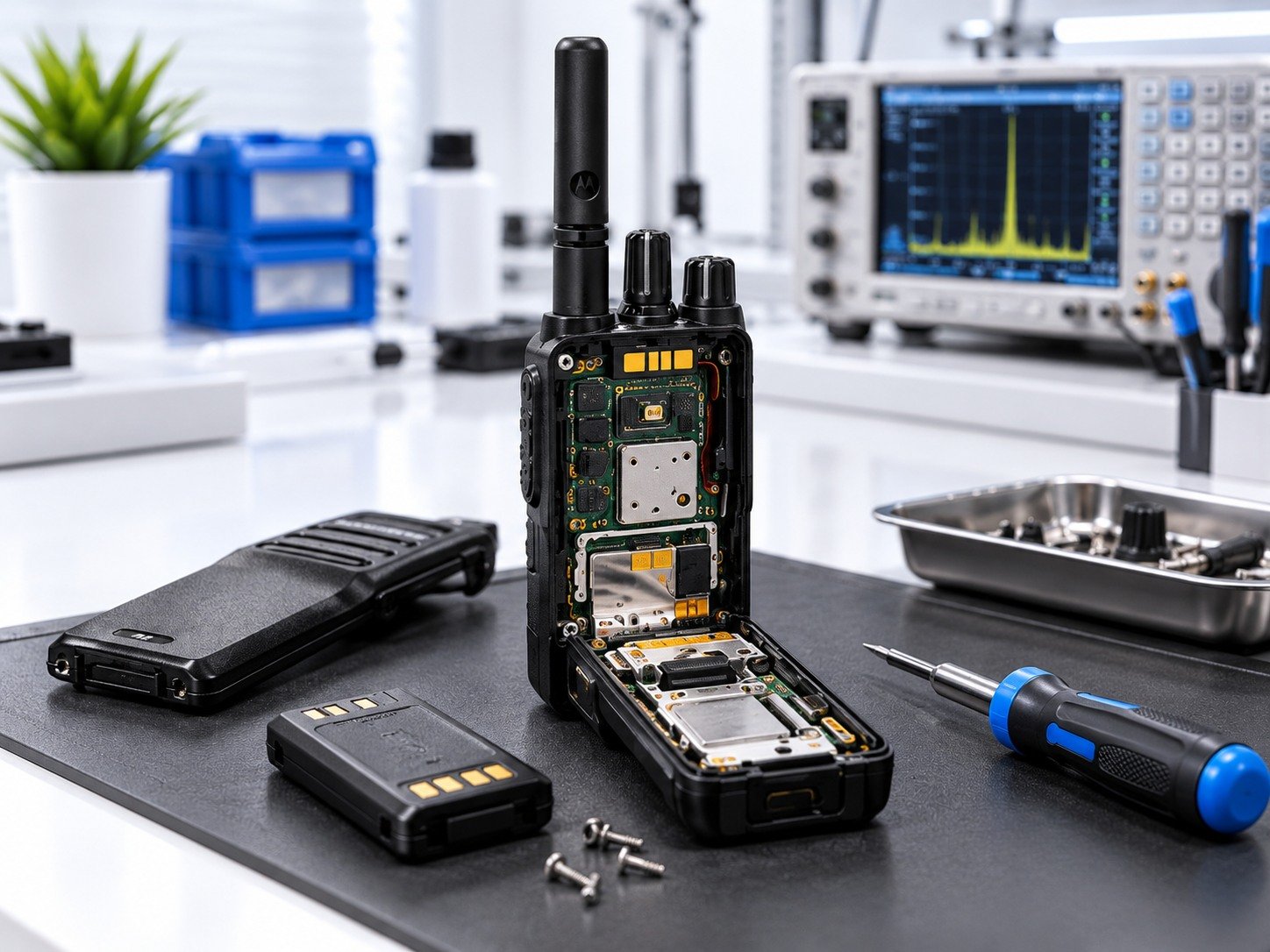
Corrective maintenance
Investigation of cause, repair proposal and tests according to the authorized scope.
From receipt to return
How our support works.
Technical support with clear steps to follow each decision.
- 1
Receipt
We identify the equipment, the accessories sent and the reported fault.
- 2
Diagnosis
We assess the full set of items to identify the cause and whether the service is feasible.
- 3
Approval
Before deciding, you receive the proposed repair, parts, price and timeframe.
- 4
Repair
The work proceeds only within the scope you approved.
- 5
Tests
The equipment is checked on a workbench according to the service performed.
- 6
Return
We return the checked items with guidance for day-to-day use.
Specialized maintenance
Preventive or corrective?
Count on our team.
Whether to prevent failures or solve a problem, the diagnosis indicates the path compatible with the equipment.Preventive maintenance
- Helps identify wear before failure
- Organizes fleet care
- Includes inspection and cleaning according to model
- Considers battery, charging and accessories
Suitable for operations that need to plan downtime and preserve equipment.
Corrective maintenance
- Starts with the symptoms and diagnosis
- Defines the repair before work begins
- Considers parts and compatibility
- Includes check after service
Feasibility and timeframe are confirmed for each case before authorization.
Frequently asked questions
Frequently asked questions
Clear up your doubts about evaluation, repair and service organization.
How do I send my equipment?
Speak to technical support before shipping the equipment. Tell us the brand, model and what happens during use: does the radio fail to turn on, lose charge, receive but not transmit, have low audio or fail intermittently? This report helps determine which items should be sent with it.
Where possible, identify each unit by its serial or asset number. If the problem involves a battery, charging cradle, power supply or microphone, tell the team so you can agree on which items to send. You do not need to disassemble the radio to describe the problem.
Include a contact responsible for approval and a list of items sent to technical support. Packaging, receipt and return must be previously agreed upon, especially when there is a damaged battery. To organize the shipment, use the form on this page or the channels on the ABC Mais Telecom Contact Us page.
What is the timeframe for technical support?
The timeframe depends on the diagnosis, available parts and authorized service. Therefore, a description by phone helps with triage, but does not replace equipment evaluation nor allows confirming the completion date in advance.
Intermittent failures require a detailed report: in which shift they occur, after how much usage time, with which accessory and in which location. Also inform if there was a fall, contact with liquid or recent configuration change. These data help differentiate the reported symptom from a condition that does not appear during a quick check.
Before work begins, confirm the scope, price and applicable estimated timeframe in the technical support proposal. If your operation cannot be without communication, ask about renting radios during maintenance. This option depends on availability and compatibility; backup equipment is not automatically included in the repair.
Do you provide technical support for Motorola and Hytera radios?
We service Motorola Solutions and Hytera radios. The assessment considers the exact model and condition of each unit. Radios of the same brand do not necessarily use the same battery, charger, antenna, connector or programming tool.
Send a readable photo of the equipment identification and describe the accessories used. In fleets with different models, indicate which radio has the failure and which continue to function. This helps organize technical support without attributing an entire operation's problem to a single device.
Service for other brands and older equipment depends on parts availability and technical feasibility. We do not promise to repair every model or replace components without an assessment. If repair is not feasible, you can consult our catalog of two-way radios and discuss with the team about a replacement compatible with the intended use, without choosing solely based on appearance.
Do the services have warranty?
The warranty conditions for technical support are stated in the proposal and the service documentation, according to the service performed. Before authorizing, check which items will be repaired or replaced, which tests are part of the scope, and how to request an evaluation if the symptom returns.
A repair warranty does not provide unrestricted coverage for every radio component. A later fault may require a new assessment to establish whether it is related to the work performed. Keep the unit identification, approved proposal and guidance you received.
When returning equipment, report whether the problem is the same as before or if a different condition has appeared. Inform changes in battery, accessory, charger, or usage environment. If there is an active factory warranty, notify before authorizing interventions so the team can evaluate the applicable approach, without assuming that all service will follow the same procedure.
What types of repair do you perform?
Technical support evaluates power supply, audio, transmission, reception, controls, connectors, accessories, and configuration failures. The diagnosis determines the possible repair; it is not correct to indicate the replacement of a board, battery, or antenna based only on the initial report.
For a radio that won't turn on, describe the signs observed on the unit and base. In audio problems, indicate whether the fault occurs in the speaker, external microphone or both. When communication fails only in certain locations, state whether other units exhibit the same behavior.
Not every communication difficulty is a device defect. Coverage and infrastructure also need to be considered within the operational context. If the problem involves multiple teams or areas, ABC can guide the conversation toward a coverage project with repeaters, without presenting this as a required repair. Preventive maintenance organizes inspection and care; corrective maintenance investigates a fault that has already been identified.
Do you use original parts?
The technical support proposal identifies the parts and conditions available for the equipment. We consider the source and compatibility of parts before replacement. Mentioning a brand on this page does not mean every part is in stock or that all models use the same component.
To evaluate battery or charger, also provide the part code when readable. For antennas, microphones and cables, send the accessory identification used. A similar fit is not enough to confirm application. Do not force connectors or make adaptations to try to fix a fault.
As per manufacturer guidelines, equipment with visible damage or abnormal operation should be evaluated before being put back into use. In case of deformed battery or abnormal heating, stop using it and seek guidance on handling and routing. Do not open the battery. The team informs the viable alternative before any authorized replacement.
Is it possible to track the service status?
Yes. The service records receipt, diagnosis, authorization and completion. The team informs about the progress through the agreed channels. The sequence illustrated on this page explains the technical support process; it is not a real-time tracker for a service order.
To check a unit, have your identification and the service reference at hand, when provided. In shipments with several radios, indicate which equipment you wish to follow up. Two units sent together may have different diagnoses, parts needs and deadlines.
Keep a person responsible for approval and communicate changes in phone or email contact. Before return, check the items that will come back and usage guidelines. If the company operates on shifts, relay this information to whoever delivers and receives the radios. The service history helps avoid losing the failure report between different departments and responsible persons.
Do you serve companies outside the region?
Yes. ABC Mais Telecom is located in São Bernardo do Campo, in the Greater ABC region, and shipping for technical support can be arranged with companies from other regions. The shipment and return must be aligned before dispatch, considering the equipment and accessories involved.
Confirm the receiving address, the responsible person and the identification that should accompany the packages. Register the list of radios, batteries, bases and other items sent. Do not send an additional accessory without notifying: a clear list facilitates checking what left your company and what arrived for evaluation.
Inform if your operation has a critical date, such as an event, scheduled stoppage or contract start. This allows discussing the service without promising a deadline that still depends on the diagnosis. For a site visit, please consult address and hours of operation and combine with the team. Costs, transportation conditions and return must be confirmed for each shipment.
My radio fell into water. Can it be repaired?
Recovery of radios that fell into water is part of our specialized technical service repair offering. Send a message to request a quote.
Do you replace two-way radio batteries?
Yes. Our specialized technical service replaces antennas, batteries and connectors, and also sells original components: buttons, antennas, batteries and chargers.
Do you repair the Motorola DEP450 radio?
Yes. ABC Mais Telecom services the main professional models, such as DEP450, DTR620, RVA50 and DTR720.
Do you perform frequency programming?
Yes. Our specialized technical service programs radios and repeaters, and also performs audio and frequency alignment.
Do you update radio firmware?
Yes, when an update is available for the model.
Technical support: how to prepare the fleet for evaluation and return to operation
When to seek technical support or a communication project?
When requesting technical support, start with what the team observes during work, without needing to indicate a part or solution. “The gatehouse can't hear the stockroom after shift change” is a more useful report than simply “the radio is broken”. Identify who transmits, who receives, where people are and whether the problem occurs always or only in some moments.
Separate three situations in the conversation: a device that has started to fail; units that have never been able to communicate with each other; and communication that works in one area, but not in another. This organization does not close a diagnosis. It helps avoid confusing the evaluation of a unit with the review of configuration or with the survey of infrastructure.
If there was a change of channels, addition of radios or replacement of accessories before the occurrence, report the change. Do not send passwords or internal files in the open field of the form; the team will guide which information is needed and how to provide it. Also, do not copy configurations from another fleet on your own to try to eliminate the symptom.
When the demand involves expansion, several company units or integration with dispatch, consult the communication systemsarea. The project and technical support have different objectives: one organizes the architecture of the operation; the other evaluates the equipment and necessary service. An initial conversation can indicate which path needs to be deepened, without requiring you to know the technology beforehand.
How to plan the fleet's technical support without stopping the entire team?
Organize a simple list of the radios by sector, shift and identification. Register which units are in use, which present any occurrence and which are separated awaiting evaluation. This survey allows discussing priorities without sending the entire fleet just because the devices have the same age.
Inform technical support which positions depend on continuous communication and at what times there is less demand. The possibility of working in batches, deadlines and available equipment need to be coordinated in the proposal. There is no universal review interval for all models or environments on this page.
A gatehouse, a stock and an external team can use the same model under different conditions. Describe the actual routine: sharing between shifts, use of remote microphone, storage and method of charging. The objective is not to transfer the diagnosis to the client, but to offer context for a clearer evaluation.
Also define who authorizes the work and who receives the instructions on return. If these responsibilities are scattered among purchases, maintenance and operations, there may be delays even after the proposal is ready. Centralizing contact does not mean all devices will have the same service: preserve the link between each unit, its report and what was effectively approved.
What to report to technical support when the battery does not last the shift?
Provide the radio model, battery identification and base used. Explain how long the unit remains in use, if the behavior changed suddenly and if it happens with all equipment or only with a specific set. It is not necessary to calculate a diagnosis: describe the routine observed by the team.
A note such as “it turns on normally in the morning but switches off before the end of the shift” is more useful when it includes the approximate time, charging details and the accessory used. Tell us whether the same set has been serviced before and whether the power supply, battery or charger was replaced recently. These items must be assessed together, without assuming in advance which one needs replacement.
Technical support indicates which items should accompany the radio. Keep the identification of each set to avoid losing the relationship between the occurrence and the accessories. Do not improvise a power supply or try to internally recover a battery. Charging and storage recommendations must follow the specific manufacturer's manual, not a generic rule applied to any product.
If there is deformation, leakage, or abnormal heating, stop using it and request guidance before charging or dispatching. For an autonomy issue without these signs, record the behavior and talk to the team. A battery purchase should only be decided after confirming the compatible code and the need for the set.
How to evaluate the technical support proposal and radio replacement?
The decision starts with evaluation and proposal, not just the equipment's age. Compare the service scope, the unit's condition, available parts, the stated timeframe, and operational needs. Technical support may identify a viable intervention, but the company must also consider how that radio will be used afterward.
If there is an ongoing project change, explain this before authorization. For example: the team will work in another area, there will be more shifts, or the company intends to standardize the devices. This information helps discuss the investment without claiming that a new radio will automatically solve any communication difficulty.
When comparing proposals, check that they include the same items. Repairing one unit, replacing a battery and renewing a fleet are different services. Confirm the accessories, programming, delivery conditions and applicable support separately. Avoid comparing only the initial price without understanding what will be delivered.
Upon return from technical support, check the radio identification and accessories received. Relay the guidelines to the shift supervisor and record any occurrence perceived in the routine, indicating when and where it happened. Bench tests and use in the company environment are different steps; reporting a subsequent difficulty allows the team to analyze the context, without assuming a new defect nor dismissing the user's observation.
Care and technical references
Wet equipment, a deformed battery or unusual heat require attention. Do not charge wet contacts, open batteries or use a heat source to dry equipment.
Request technical support.
Describe the equipment and the fault. Our team will explain how to send it and the next steps in the assessment.
Response by email and WhatsApp. No obligation · price on request.